Sharing Our Story on Stage: Bigger Energizer at EnergyLab's Decarbonisation Panel
Last week our co-founder @Zoe Chen had the privilege of joining the panel for Breakthrough Innovation Driving Decarbonisation, hosted by EnergyLab at the RMIT Activator in Carlton. The room was full of the people actually building Melbourne's climate future: founders, investors, operators, and corporate sustainability leaders and for one evening the conversation moved past theory to what it really takes to commercialise deep climate tech.
Zoe shared the stage with a genuinely impressive line-up. Four very different startups to the same climate problem and a reminder that decarbonisation isn't one breakthrough, it's hundreds of them happening at once.
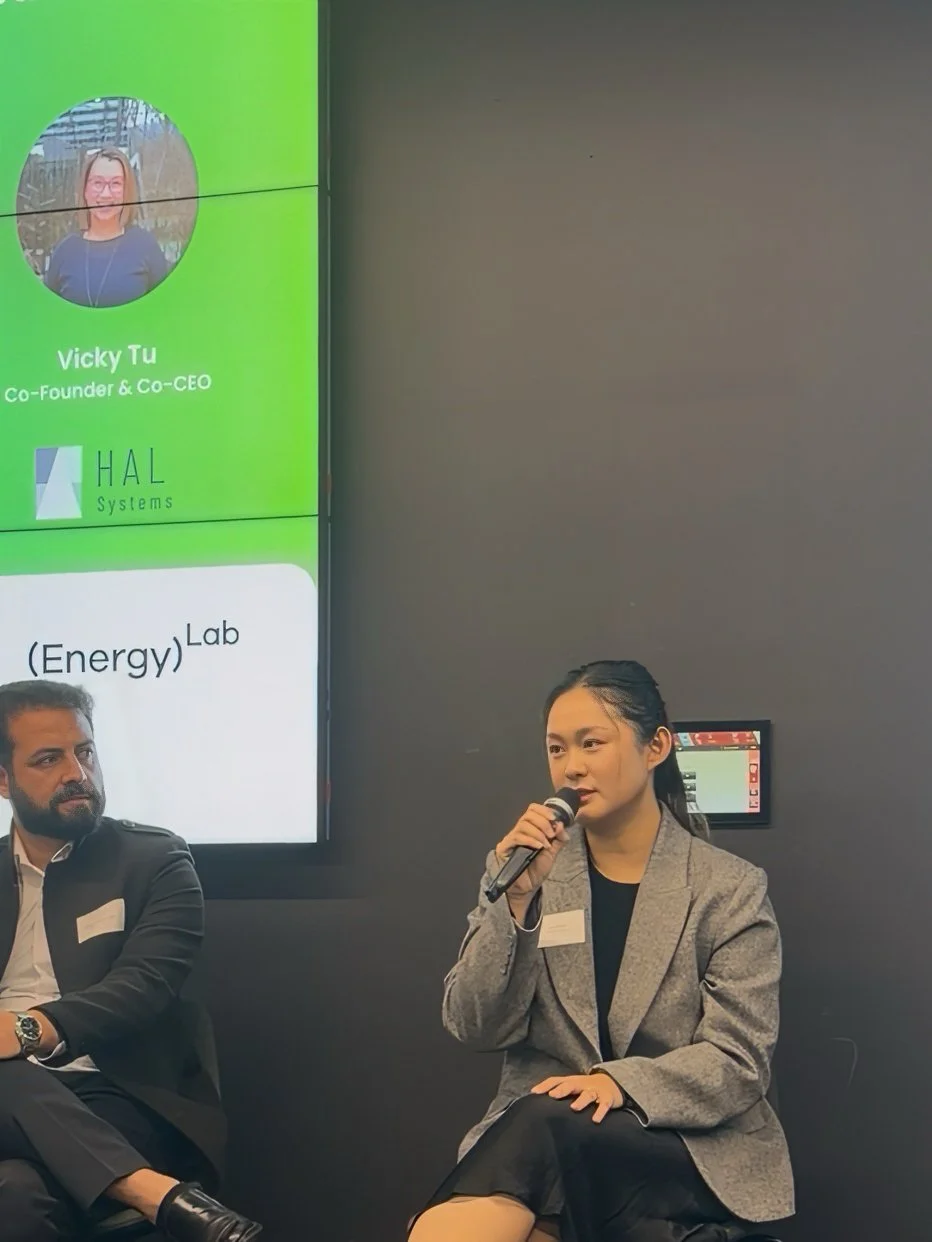
At Bigger Energizer, we build electric heavy transport and waste fleets from the ground up, including custom electric side-loader garbage trucks. The panel asked each speaker to be open about their journey, their challenges, and their wins. In that spirit, here's some of what Zoe shared on our behalf.
The journey: building hardware in a software world
When we started Bigger Energizer, plenty of people gently suggested we'd picked the hard road. They weren't wrong. Heavy transport and waste fleets are some of the most stubborn vehicles to decarbonise, they're heavy, they run brutal duty cycles, and the industries that operate them are, understandably, risk-averse. A garbage truck can't have an off day.
Choosing to build the hardware ourselves, rather than retrofitting or waiting for someone else to solve it, meant taking on real-world engineering, international manufacturing, and supply chains that don't forgive mistakes. It's slow, capital-intensive, and unglamorous compared to a pure software play. But it's also where the emissions actually are. You can't optimise your way to net zero in these sectors — at some point someone has to build the truck.
The wins: proof that it works
One of the most rewarding parts of the night was getting to talk about traction because for a long time, this work is invisible. The team is heads-down on engineering, certification, and conversations with operators who need to trust us before they'll trust the vehicle. And then one day the truck is on the road, doing the job, quietly not burning diesel.
What Zoe conveyed on the panel is that these wins aren't just ours: every fleet that electrifies makes the next one easier. The economics improve, the supply chain matures, and the "risky" decision becomes the obvious one. We're not just selling vehicles; we're helping de-risk a transition that the whole industry knows is coming.
Why this matters to us — and to you
For our customers and partners reading this: events like this are part of how we stay sharp. Standing up in front of a critical, knowledgeable room and explaining the journey forces a kind of honesty that's good for the business. It sharpens what we're building and reminds us who we're building it for.
If you operate a heavy fleet, manage waste collection, or are simply curious about what electrified heavy transport could look like for your organisation, we'd genuinely love to talk. The transition to clean fleets is happening ,and Melbourne, as this panel proved, is a great place to lead it.
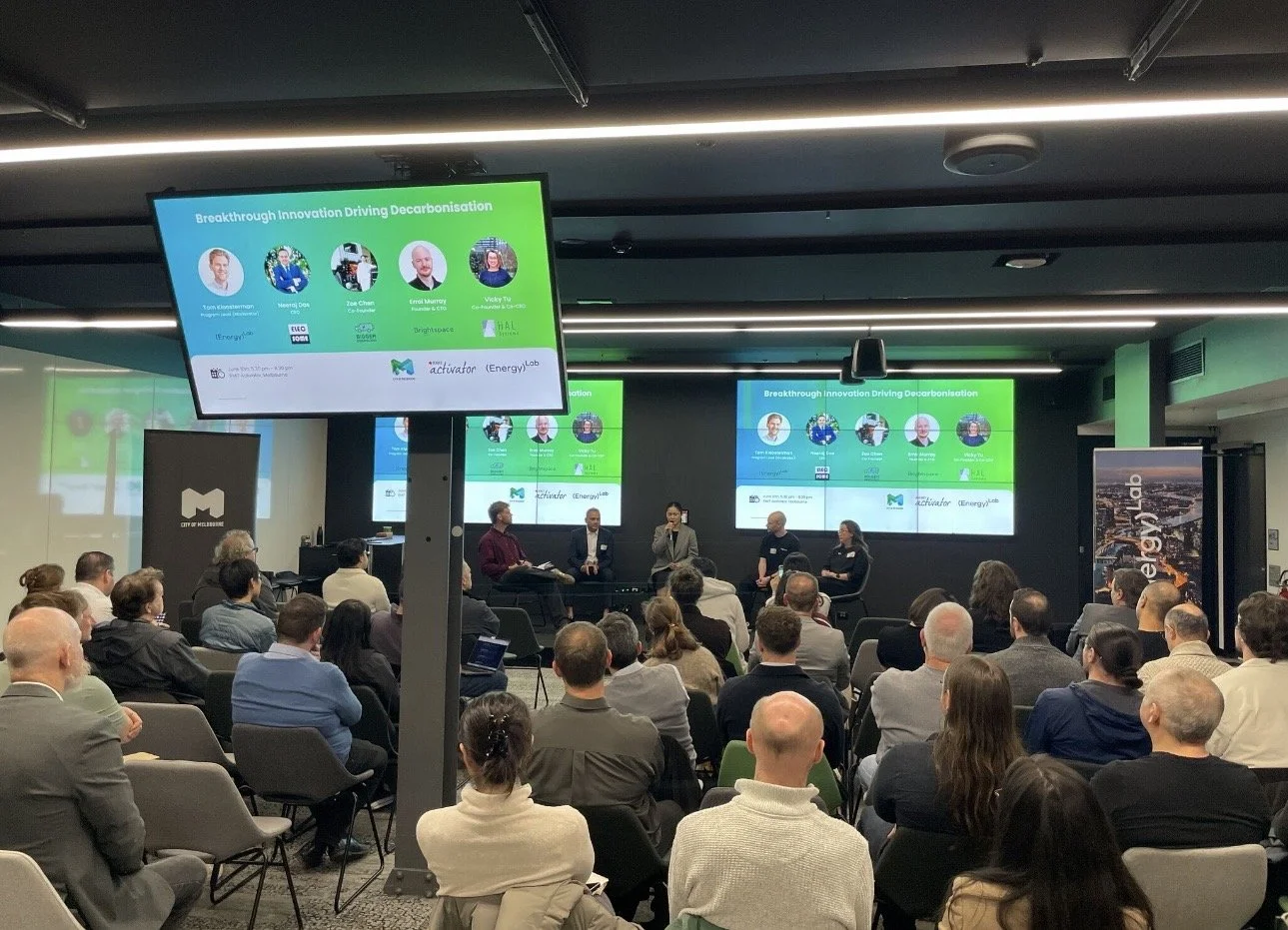
Bigger Energizer builds electric heavy transport and waste fleets from the ground up. Co-founder Zoe Chen represented the team on the panel "Breakthrough Innovation Driving Decarbonisation," hosted by EnergyLab and sponsored by the City of Melbourne, 10 June 2026, at the RMIT Activator, Carlton.